Technology
Two ways to go live
Embed the API in your own flow, or start selling from day one on the white-label platform. Same Guard, same pricing, same risk engine behind both.
For teams that embed
API integration
Quote, buy, settle and extend Guards from inside your payment or invoicing flow. Your branding, your margin, your settlement.
- REST API, OAuth2 client credentials, JWT
- Server-sent events for every Guard status change
- Sandbox with the same endpoints as production
Daysfrom sandbox keys to first live Guard
For teams that want to sell now
White-label sales platform
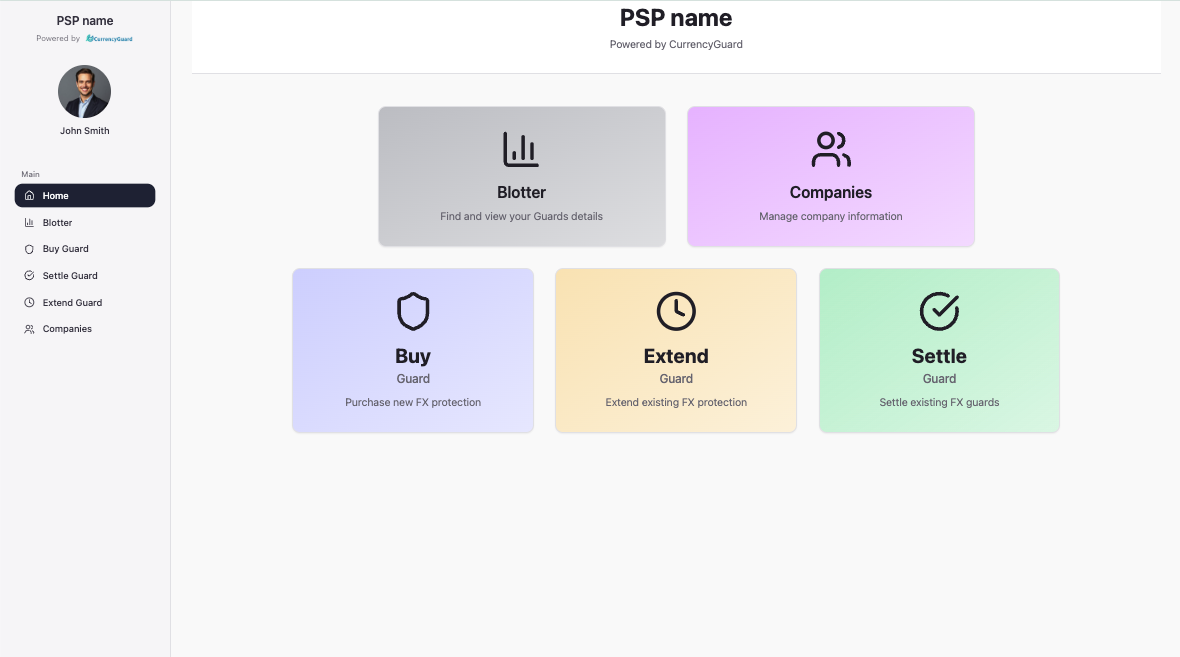
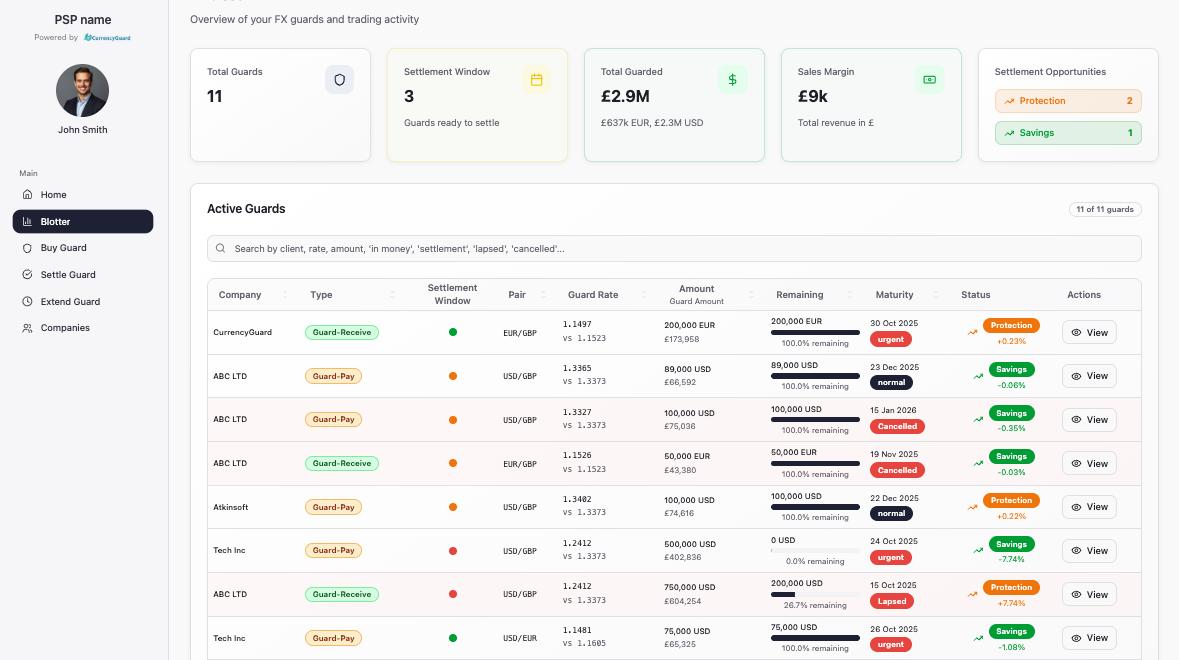
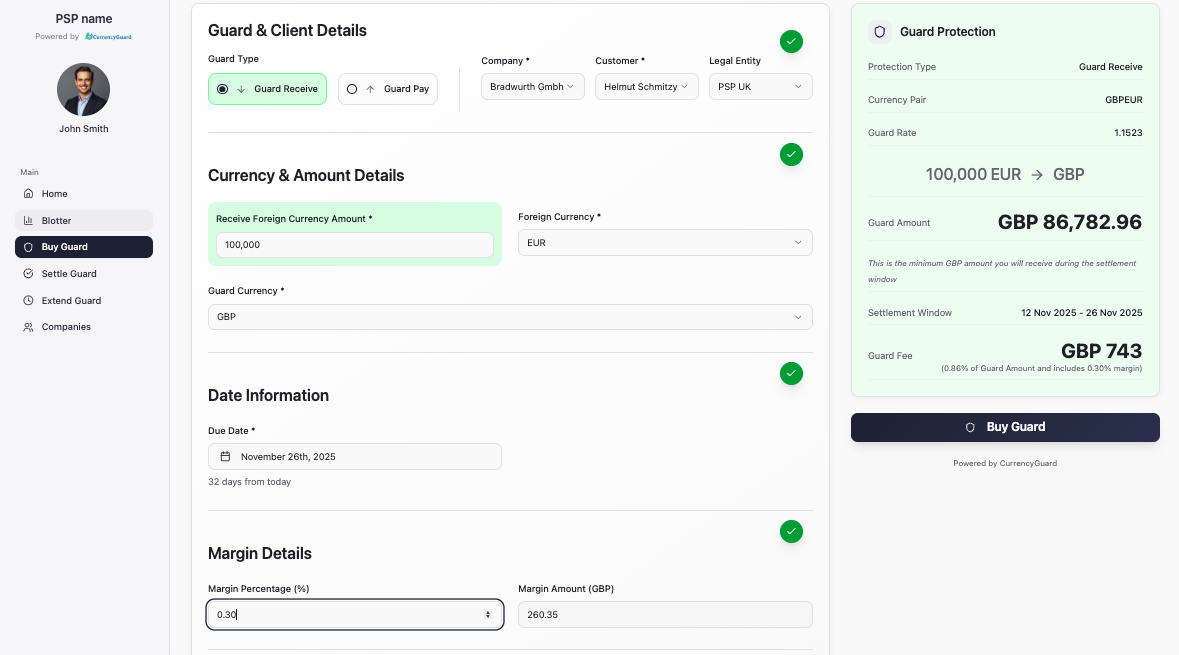
A ready-made front end for your sales team: onboard clients, buy Guards, manage settlements and extend protection. Nothing to build.
- Your name and logo on every screen
- Blotter, companies, buy, extend, settle
- Move to the API later without re-onboarding clients
Hoursfrom signed agreement to first Guard sold
API integration
How a Guard moves through your flow
Three calls cover a Guard's life: quote it, buy it, settle it. Extension is a fourth when a payment runs late. The diagram uses the real endpoints you will call in the sandbox.
Loading...
The quote endpoint is the first arrow; the price returned is the protection price plus your margin.
What the API covers
Six things, nothing you have to take on trust
The full reference, the sandbox and the problem catalogue are on the developer portal. This is the shape of it.
Quote and buy
Indicative quote with your margin applied, then purchase against it. quote-guard, buy-guard.
Settle in full or in part
Use the Guard rate for all or some of the payment, any time inside the settlement window.
Extend when a payment is late
Move the settlement date out at an indicative cost, without cancelling and re-buying.
Events as they happen
Server-sent events for every status change, so your UI never polls.
Exposure and risk view
Open Guards, guaranteed amounts, due dates and the offsetting positions, per client and in total.
Users, companies and roles
OAuth2 and JWT, role-based access, strict tenant isolation, and clients that can be named or anonymous.
Same endpoints as production. Agents can use the same tools over MCP.
Risk
Who carries the market risk
Not you, and not your client. CurrencyGuard neutralises its own exposure for every Guard sold, and you can see it.
Back-to-Back Risk Neutralization
As Guard values decrease (negative MtM), hedge values increase proportionally (positive MtM), resulting in zero net exposure.
Back-to-back neutralisation
For every Guard sold, CurrencyGuard takes an offsetting position in the market. The two move against each other, so the net exposure is zero.
The API shows the mark-to-market of Guards sold against the positions held, in a portfolio dedicated to your PSP.
100% coverage
The offsetting portfolio always meets or exceeds the exposure.
Monitored continuously
Portfolio valuation and risk assessment run in real time, not end of day.
How Guards are priced: From market parameters and tenor, and, where you share it, your clients' invoice history and payment behaviour. The more history, the sharper the price. Pricing is indicative until you apply your margin.
White-label sales platform
Start selling from day one
For PSPs that want to move before the integration is built. Your team onboards clients, buys Guards, manages settlements and extends protection in a platform carrying your name. When the API is ready, the clients come with you.
Thirty minutes, on your numbers.
Pick the path, we will walk it with you
Sandbox keys for your engineers, or a white-label workspace for your sales team. Either way, the first Guard is closer than a roadmap.