Insights
Articles and analysis on FX risk, payments infrastructure, and the SME blind spot.
Latest
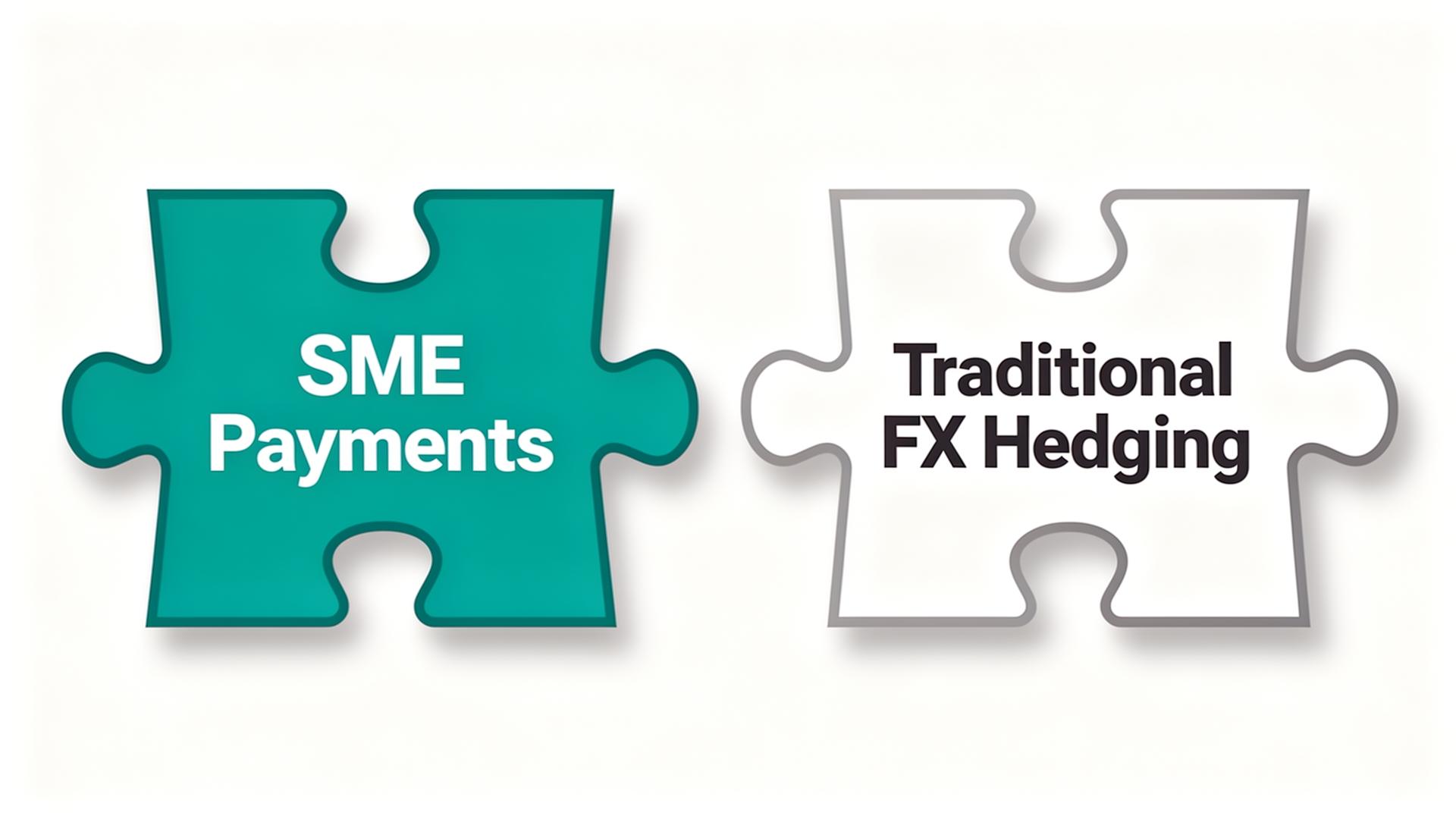
The Job I Didn't Finish at the Bank
At the bank we built FX automation for a handful of big clients. Payment providers can now do it for millions of small ones.
The expensive part of automating FX risk was always the plumbing. That part has gone.
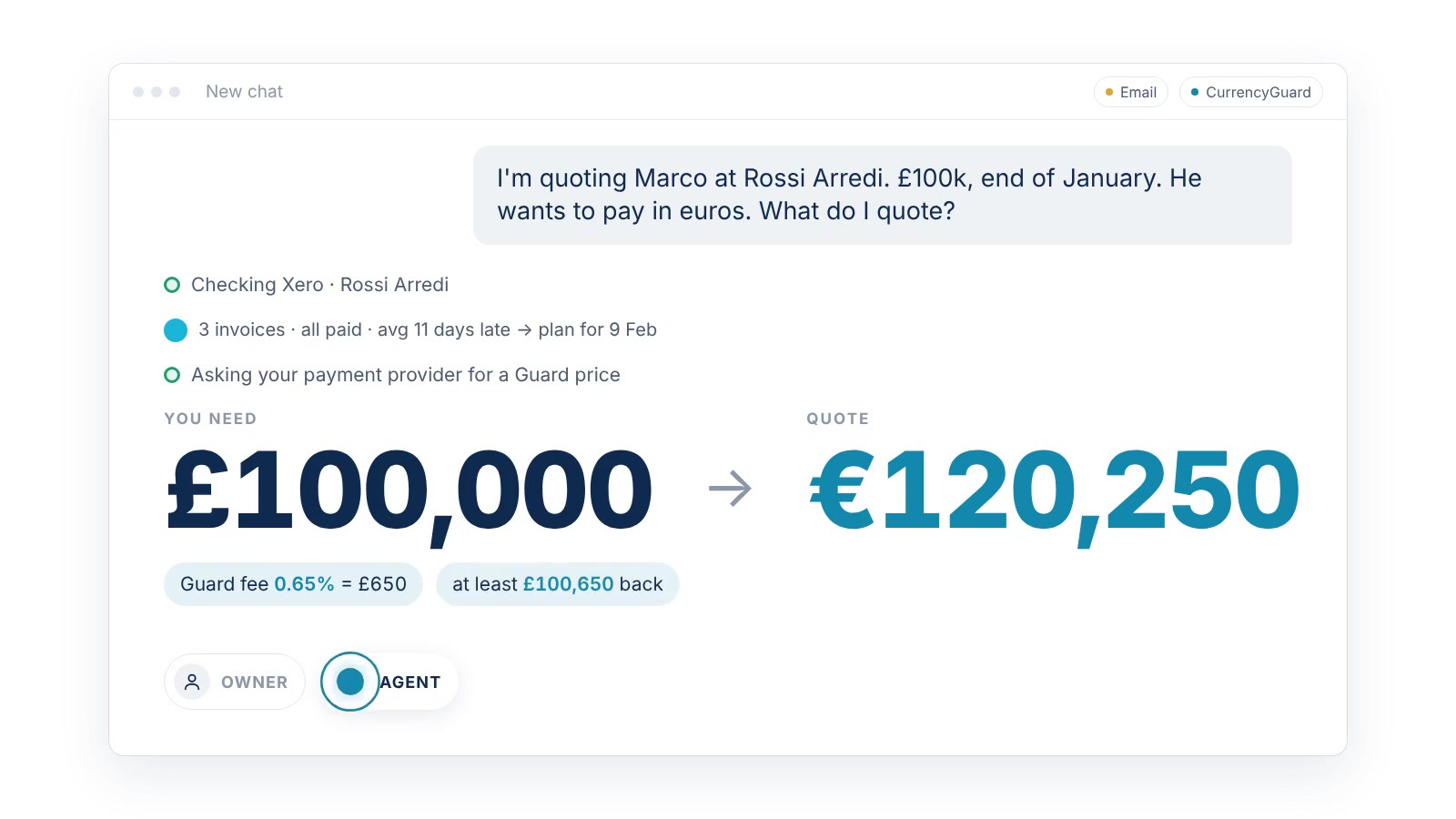
Read articleThe Treasurer Nobody Hired
Nobody has ever answered that ad, mostly because nobody has ever posted it.
Doing nothing is a decision too, it just doesn’t usually get priced.
Read articleThe Rail Changes. The Risk Doesn't.
Why programmable payments make FX protection more important, not less
Agentic commerce accelerates commitment. Stablecoins accelerate settlement. The gap between the two — where FX risk lives — stays open either way.
Read article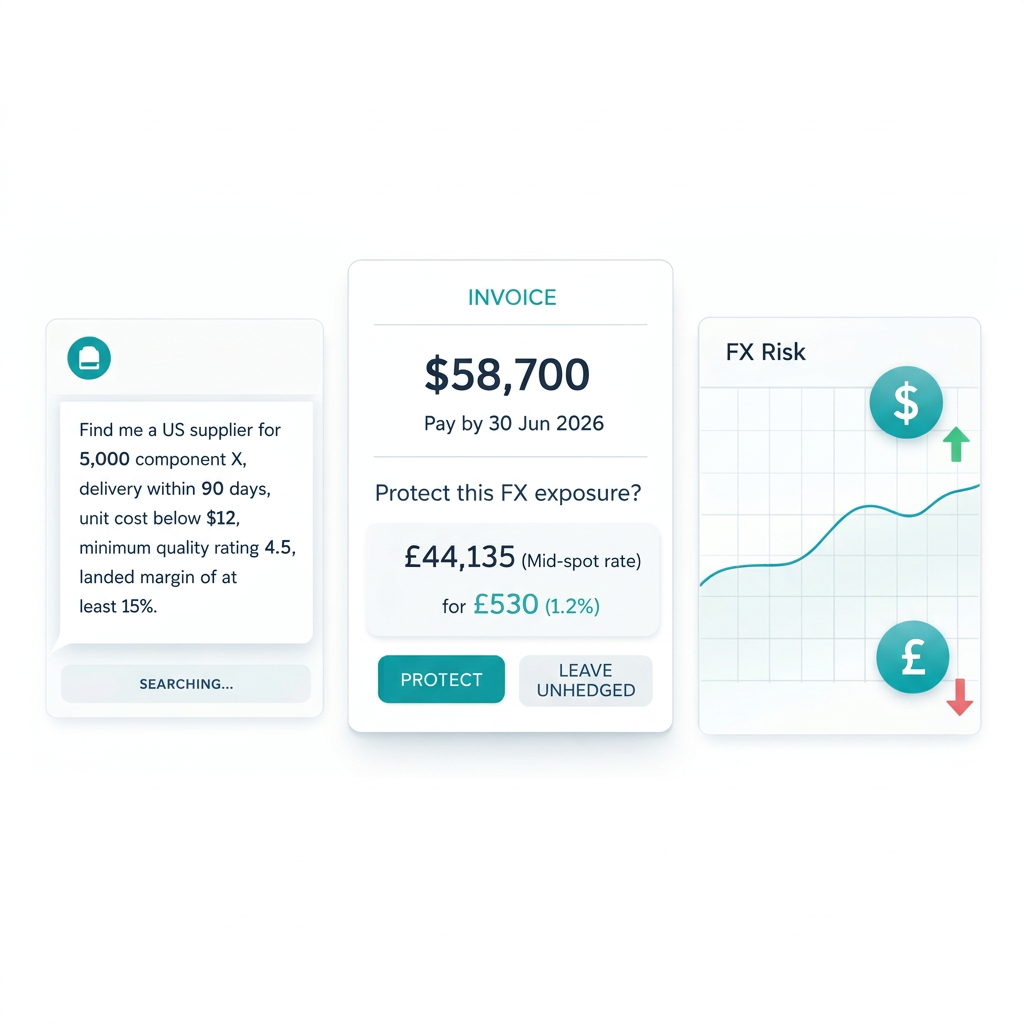
When AI Commits to a Payment, Who Manages the FX Risk?
Agentic Cross-Border Payments Need a Protection Layer
As AI-assisted procurement and invoicing reshape cross-border trade, the FX exposure created between commitment and settlement remains unaddressed. Traditional hedging structures were not designed for automated workflows.
Read articleSeries: FX Risk & SME Payments
FX risk, payments, and the SME blind spot
A five-part series on why FX execution improved — but FX hedging adoption did not.
Over the past decade, cross-border payments for SMEs have improved dramatically. FX execution has become cheaper, faster, and more transparent. Payment rails have modernised. PSPs have rebuilt large parts of the stack.
And yet, FX risk at SME level remains largely unchanged.
This Insights series explores why. It examines how FX exposure is created in everyday commercial activity, why existing solutions have struggled to scale, and what it looks like when FX risk management is treated not as a trading product — but as part of payments infrastructure.
Written for PSPs, fintech operators, and regulators, these articles focus on structure, behaviour, and outcomes — not market speculation or product marketing.